

What is Syntonics?
Syntonics or optometric phototherapy is the branch of ocular science dealing with the application of selected light frequencies through the eyes. It has been used clinically for over 70 years in the field of optometry with continued success in the treatment of visual dysfunctions, including strabismus (eye turns), amblyopia (lazy eye), focusing and convergence problems, learning disorders, and the aftereffects of stress and trauma. In recent years, Syntonics has been shown to be effective in the treatment of brain injuries and emotional disorders.
Syntonic phototherapy may be today's most advanced clinical science in light therapy. Since the 1920s, it has been used effectively by optometrists to treat patients who have inefficient visual function. Since 80 percent of learning occurs by way of the eyes, inefficient visual function can adversely affect all aspects of one's life, including academic achievement, athletic performance, proficiency at work, and homemaking.
Light therapy is also commanding respect in the medical community as its benefits are investigated in the treatment of jet lag, PMS, sleep disorders and conditions related to the body's daily rhythms. Exposure to certain colors has also been found to affect behavior, mood and physiological functions.
Patients are diagnosed by symptoms, vision evaluation, visual/motor performance, and peripheral vision sensitivity. They may have blurred vision, a crossed or lazy eye, double vision, or poor academic achievement. If appropriate, they are treated by way of their eyes with selected visible light seen as colors.
Not all retinal (light-sensitive) nerves in the eyes serve vision. Some connect the retina directly to non-visual brain centers such as the hypothalamus and pineal gland. These centers influence electrical, chemical, and hormonal balances that affect all body functions including vision. Years of clinical application and research have demonstrated that certain selected light frequencies (colors), applied by way of the eyes to these centers, can produce beneficial results in the body.
Controlled clinical studies by Dr. Robert Michael Kaplan and Dr. Jacob Liberman proved that the usual result of this relatively short-term treatment is improvement in visual skills, peripheral vision, memory, behavior, mood, general performance, and academic achievement. They confirmed that large numbers of children with learning problems have a reduction in the sensitivity of their peripheral vision. During and after phototherapy, they demonstrated improvement of peripheral vision and visual skills. Control subjects who did not receive therapy showed no improvement in their peripheral vision, symptoms, or performance.
In 1985 psychiatry discovered light therapy. In medical clinics throughout this country and around the world, many individuals are now receiving exposures to bright light as treatment for Seasonal Affective Disorder (SAD).
Syntonics can be used as the primary treatment or to support other therapies to aid in the remediation of strabismus, amblyopia, accommodative/convergence problems, asthenopia, ametropia, visual attention deficit, vision-related learning and behavior problems, and visual field constrictions associated with visual stress, brain injury, degenerative ocular disorders, and emotional trauma.
Common Symptoms Treated by Syntonic
Visual
Blurred or fluctuating vision
Eye turn or lazy eye
Double vision
Eye strain or fatigue
Reduced peripheral vision
Glare or light sensitivity
Night vision problems
Visually Related
Headaches
Poor concentration or attention span
Reading problems
Reduced academic performance
Poor coordination or balance
Reduced athletic performance
Driving or depth perception problems
Job performance or sustained near task difficulties
History of Stress Trauma
Physical
Mental
Emotional
Illness: chronic or severe
Allergies: chronic or environmenta
An Abbreviated History of Syntonics and Phototherapy
Light has been used as medicine from ancient times. Egyptians filtered sunlight through precious gems, Greeks built solarium cities in high mountains to harness ultra-violet light for healing tuberculosis, and red light was used to quell the effects of smallpox virus.
The second Nobel Prize in Physiology of Medicine was awarded in 1903 to Niels Ryberg Finsen, M.D., "in recognition of his contribution to the treatment of diseases, especially lupus vulgaris, with concentrated light radiation, whereby he opened a whole new avenue for medical science."
Other practitioners in the late 19th and early 20th centuries such as Babbitt, Pleasanton, Pancoast, Loeb and Dinshah also applied color on the skin as a non-intrusive treatment for health problems. Also, at that time, it was first discovered that light entering the eyes not only served vision but also traveled to brain regions not related to eyesight.
Use of selected light frequencies in optometric practice began in the early 1920s when H. Riley Spitler, D.O.S., M.D., M.S., Ph.D., discovered that light and color delivered through the eyes played a key role in controlling biological development and function. Spitler concluded that many systemic, mental, emotional and visual ailments were due to imbalances in the autonomic nervous and endocrine systems.
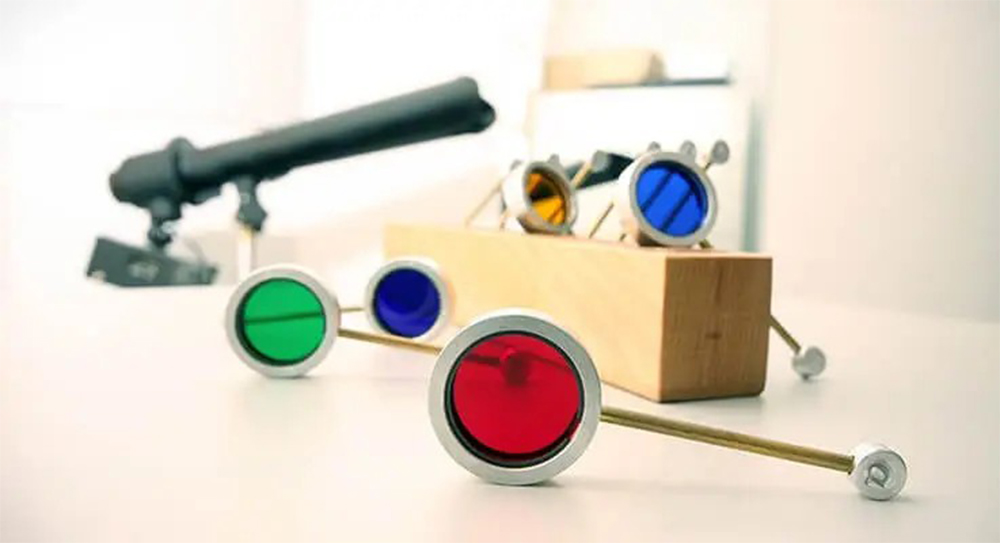
He named this new clinical science Syntonics – from "syntony", to bring into balance – wherein frequencies of light applied through the eyes are used to rebalance the body's regulatory centers thereby correcting visual dysfunctions at their source. His model suggests that red (low energy, long wavelength) at one end of the visible spectrum stimulates the sympathetic nervous system, green (middle frequencies) yields physiological balance, and blue/indigo (high energy, fast frequencies) activates the parasympathetic nervous system.
In 1933 Spitler, a past president of the Ohio State Board of Optometry and past first vice-president of the American Optometric Association, established the College of Syntonic Optometry to encourage education and research related to the therapeutic application of light and color to the visual system.
In 1941 he published his thesis: THE SYNTONIC PRINCIPLE: Its Relation to Health and Ocular Problems. This included a survey of clinical results from syntonic practitioners: Syntonic Effectivity: A Statistical Compilation of Ocular Anomalies Handled by Applying the Syntonic Principle. This study showed that of 3067 individuals, 2791 (90.7%) taking syntonic treatment responded positively.
After Spitler's death in the 1960s, Charles Butts developed the BASIC SYNTONIC COURSE, an optometric diagnostic workup and treatment regimen in which patients were diagnosed according to symptoms using a specific case history, the O.E.P. "21 points," pupil responses, central visual fields and other tests of eye teaming and motility.
Advanced approaches based on earlier descriptions of syntonic applications, current scientific research and modern technology encourage an evolving phototherapy and a wider range of clinical application.
Suggested Reading
THE SYNTONIC PRINCIPLE: Its Relation to Health and Ocular Problems, by H. Riley Spitler was published by the College of Syntonic Optometry in 1941. Covers the thesis from which the practice of syntonic phototherapy was established. Available through the College Of Syntonic Optometry.
LIGHT MEDICINE OF THE FUTURE, by Jacob Liberman, Bear and Co., Santa Fe, NM, 1991, covers medical and psychological uses of light and contains an extensive bibliography. It is a must-read for anyone interested in the subject.
LIGHT YEARS AHEAD: The Illustrated Guide to Full Spectrum and Colored Light in Mindbody Healing, Brian Breiling and Bethany ArgIsle, editors, Celestial Press, Berkeley, CA, 1996, is a compilation of the Light Years Ahead conference held in 1992 in San Jose, California. With chapters written by leading practitioners, it is one of the best texts to get an overview of light therapies and light technologies in use at that time.